
The Fed Raised Rates. What Does That Mean for Mortgage Rates?
By Sam Alpert, President and Mortgage Loan Originator, NMLS #1961555
The Fed raised its benchmark rate for the first time since 2023. That does not mean every mortgage rate automatically rose by 0.25%. Here is what actually matters now.
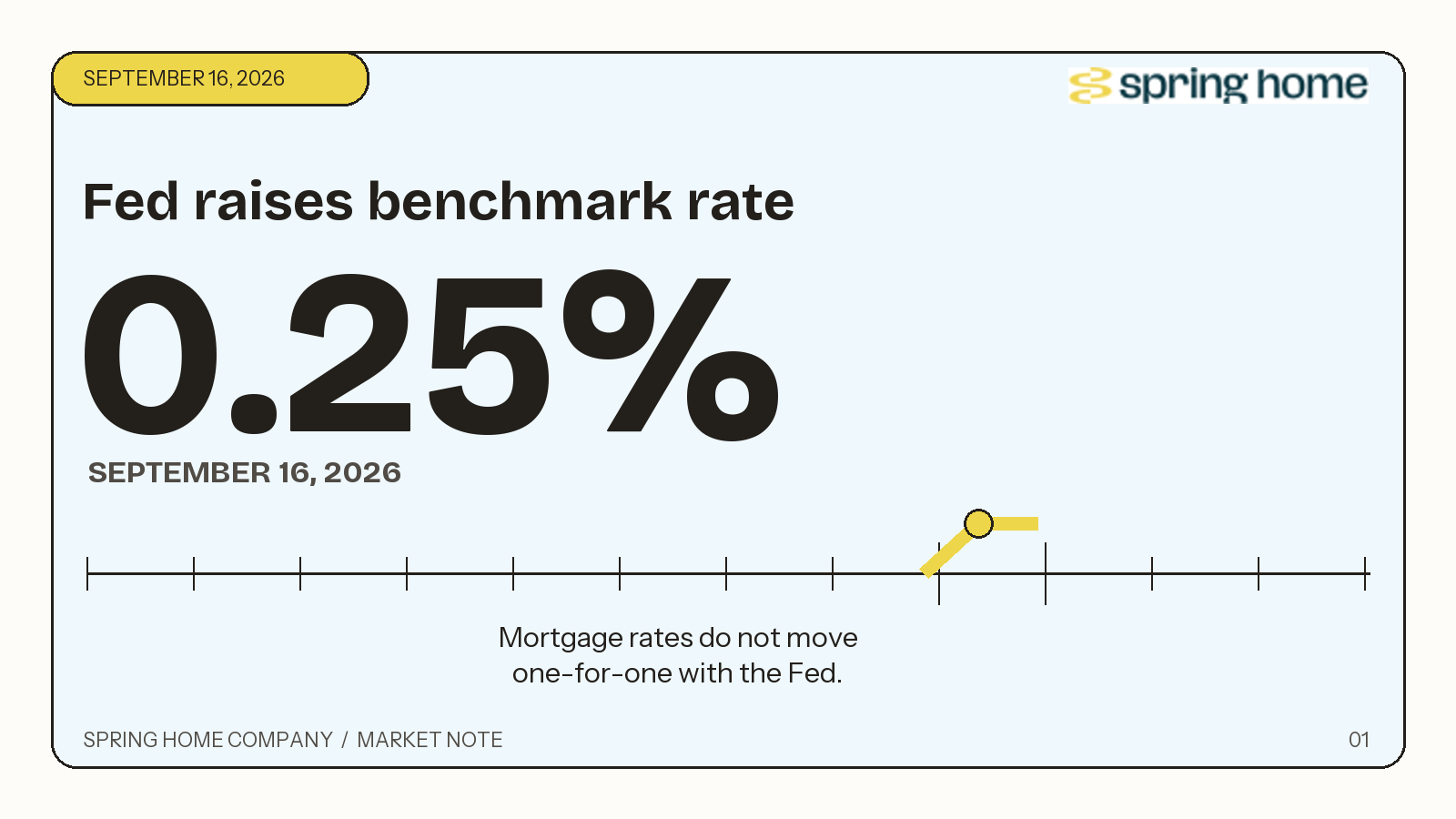
On September 16, the Federal Reserve raised its benchmark interest rate by 0.25 percentage point, bringing its target range to 3.75% to 4.00%.
The vote was unanimous, 12-0. It was the Fed's first rate increase since July 2023.
If you are buying a home, refinancing or just watching rates, your first question is probably simple: Did mortgage rates go up by 0.25% too?
No. Mortgage rates do not work that way.
The Fed rate is not a mortgage rate
The Fed controls a short-term overnight rate used between banks. It has a direct effect on borrowing costs such as credit cards, home equity lines of credit and some adjustable-rate loans.
A 30-year fixed mortgage is different. It is priced much more closely off the bond market, especially mortgage-backed securities and longer-term Treasury yields. Those markets move all day based on inflation, jobs, economic growth, government borrowing and what investors think the Fed will do next.
That is why mortgage rates can rise before a Fed hike, fall after one or barely move on announcement day.
Markets were already expecting the quarter-point increase. The bigger question is what comes next.
What the Fed said
The Fed said inflation remains elevated and that the action is meant to help return inflation to its 2% goal sooner. It also said domestic spending has been resilient, job gains have kept pace with the workforce and unemployment has changed little.
The new projections matter. Sixteen of 18 Fed officials expect at least one more quarter-point increase by the end of 2026. The median projection puts the federal funds rate at 4.00% to 4.25% at year-end.
Fed officials also raised their 2026 inflation projection. They now expect headline PCE inflation of 3.7%, and they do not project a return to 2% inflation until 2029.
These are projections, not promises. The next move will depend on the data.
So what happens to mortgage rates now?
The honest answer is that one Fed meeting does not settle it.
Mortgage rates had already climbed before the decision as longer-term Treasury yields rose. The exact rate available to any borrower depends on the live market, loan type, credit, property, down payment and other factors.
From here, mortgage rates will be watching a few things:
Inflation: Softer inflation would usually help bonds and mortgage rates. Persistent inflation would work the other way.
Jobs and economic growth: A cooling economy can pull long-term yields lower. Stronger-than-expected data can keep pressure on rates.
Energy prices and geopolitical events: Higher energy costs can feed inflation expectations quickly.
The Fed's next steps: Markets will keep repricing the odds of another increase this year.
Treasury supply and investor demand: Mortgage rates can stay high even without another Fed move if longer-term bond yields remain elevated.
In other words, the next inflation report may matter more to your mortgage rate than the widely expected hike.
What buyers should do
Do not make a homebuying decision based on a headline alone.
A rate is only one part of the deal. Purchase price, down payment, credit, loan type, points, taxes, insurance and how long you expect to keep the loan all matter.
If you are actively shopping, ask for real numbers at current pricing. Compare the monthly payment and cash needed at closing. Then decide whether locking now or floating makes sense for your timeline and risk tolerance. Nobody can guarantee the next rate move.
If the payment works and the home fits, a Fed headline does not automatically make the deal bad. If the payment does not work, hoping for an immediate rate drop is not a plan.
What homeowners should do
Homeowners with a fixed-rate mortgage will not see their existing principal-and-interest rate change because of the decision.
Borrowers with a HELOC or another variable-rate debt may feel the increase more directly, depending on the loan's index and adjustment terms.
For refinancing, compare the full cost with the monthly savings and break-even period. A lower advertised rate does not automatically make a refinance worthwhile.
The bottom line
The Fed raised its rate. It did not set your mortgage rate.
Mortgage rates had already reacted to inflation concerns and the bond market before the announcement. What happens next will depend on inflation, jobs, energy prices, Treasury yields and whether the Fed follows through with another increase.
The right move is not to guess the next headline. It is to run the numbers for your actual loan and make sure the payment fits.
Disclaimer: This article is for general informational purposes only. Mortgage rates and loan terms vary by borrower, property, loan program and market conditions. This is not a commitment to lend or a guarantee of any rate or approval.